





Security Seals for Containers: The Complete Guide for Kenyan Businesses

Every day, thousands of containers leave factories, warehouses, and ports with nothing between the cargo and a thief except a steel door and a small numbered lock. That lock is the heart of security seals for containers, and it is the difference between a load you can prove arrived intact and one you can only hope did. If you ship, import, export, or store goods in Kenya, understanding security seals for containers is no longer optional.
This guide explains security seals for containers from the ground up. We cover what they are, why they matter, the main types, the ISO 17712, C-TPAT, and WCO SAFE standards, how to fit and record them, and how to choose the right option for your cargo. It is written for importers, exporters, clearing agents, and the micro, small, and medium enterprises (MSEs and SMEs) that move goods through Mombasa, Nairobi, and inland container depots.
By the end, you will know which security seals for containers suit your business, how to avoid the mistakes that make a seal useless, and what to ask a supplier before you buy. A detailed FAQ follows at the bottom, and you can explore our full range of security seals at any time.
What Are Security Seals for Containers?
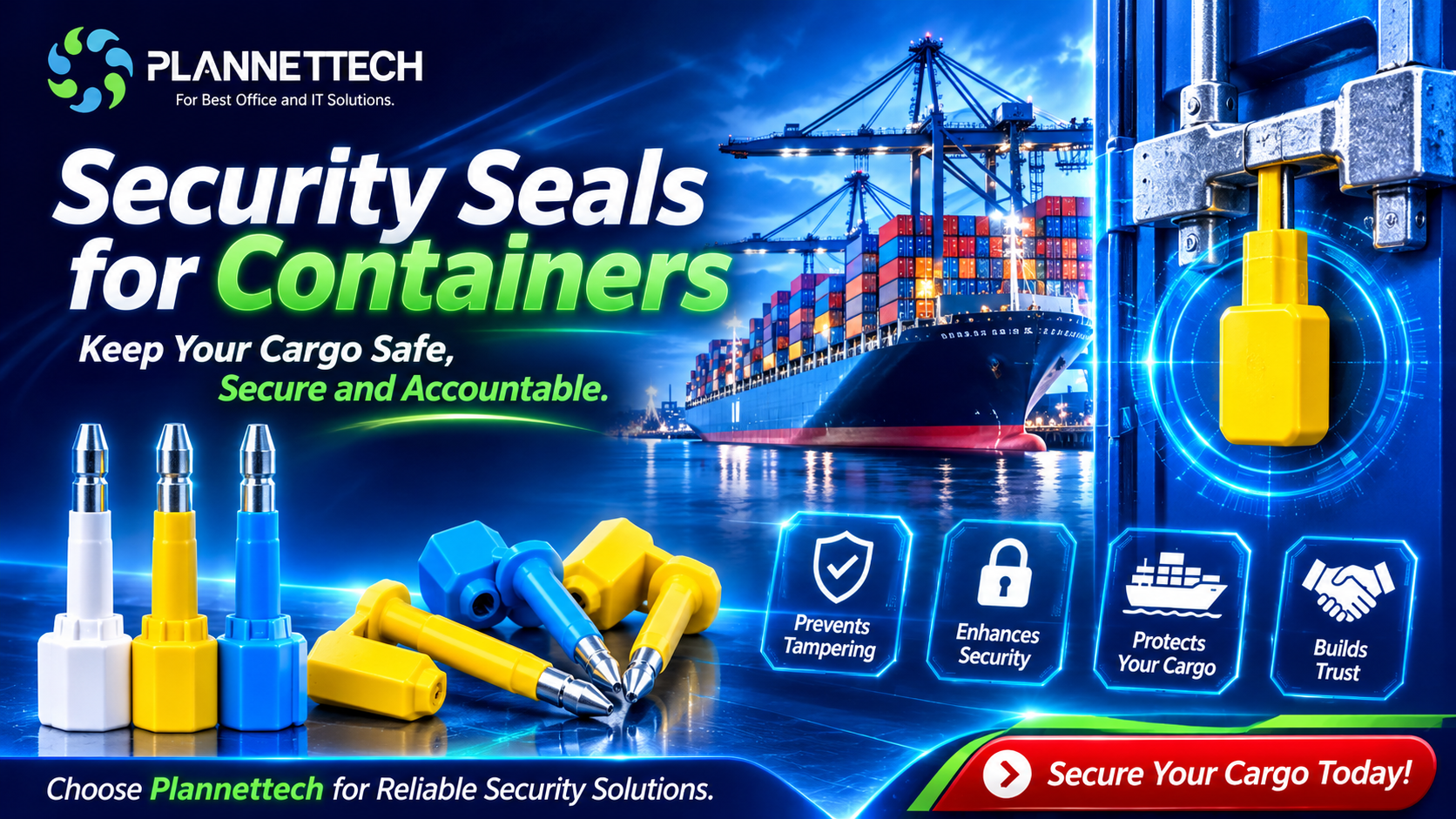
Security seals for containers are single-use locking devices fitted to the door mechanism of a shipping container, truck trailer, or similar closed load. Once fitted, they can only be removed by cutting or destroying them, so any attempt to open the doors leaves visible evidence. In other words, security seals for containers do not make a container impossible to break into; they make it impossible to break into without leaving proof.
Every seal carries a unique serial number, often with a barcode or the owner’s name and logo. When a load is sealed, that number is written on the packing list, delivery note, or bill of lading. At each handover, the receiver compares the number on the seal with the paperwork. This simple routine is what turns security seals for containers into a chain-of-custody tool and not just a piece of hardware.
It helps to separate two ideas: a seal and a lock. A padlock controls who can open a door, while a seal shows whether the door was opened. The best security seals for containers are often used together with a locking bar, so you get both control and evidence. Our bolt seals are a good place to start, and our guide on what a bolt seal is used for covers that product in depth.
Why Security Seals for Containers Matter
Cargo crime in transit is rarely dramatic. More often, a few cartons disappear between the depot and the customer, and nobody can say where. Security seals for containers deal with exactly this problem, because a broken or mismatched seal tells you the loss happened after sealing and narrows the search to a specific leg of the journey.
Seals also protect you in disputes. If a buyer claims a shipment arrived short, an intact seal with the right number supports your case. If it arrives broken, you have grounds for an insurance claim. Insurers and customers increasingly expect security seals for containers to be used and recorded, so skipping them can weaken a claim.
There is a compliance side too. Customs authorities and large buyers treat properly sealed containers as lower risk, and a seal discrepancy can trigger inspection and delay. Using the right security seals for containers helps cargo move faster through ports and borders, which saves storage costs and keeps customers happy.
Types of Security Seals for Containers
There is no single best option, because the right security seals for containers depend on your cargo value, route, and customer requirements. Below are the main types. For a wider overview of seal categories, see this guide to types of security seals.
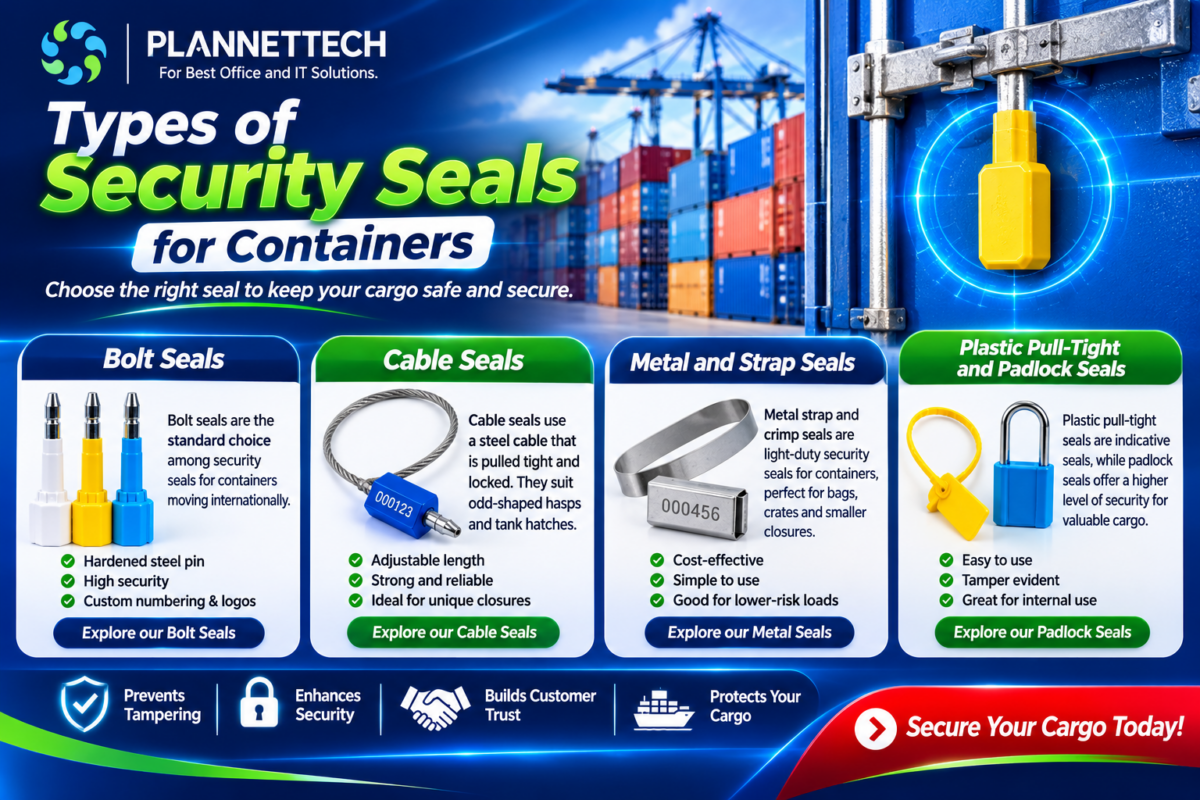
Bolt seals
Bolt seals are the standard choice among security seals for containers moving internationally. A hardened steel pin locks into a barrel and can only be removed with bolt cutters. They are usually sold as high-security seals and come with custom numbering and logos. Browse our bolt seals range for container and truck use.
Cable seals
Cable seals use a steel cable that is pulled tight and locked. Among security seals for containers, they suit odd-shaped hasps, tank hatches, and truck doors where an adjustable length helps. Strength depends on cable diameter, so always check the specification. See our cable seals for options.
Metal and strap seals
Metal strap and crimp seals are lighter-duty security seals for containers, often used on bags, crates, and smaller closures, or as a secondary seal on a locked door. They are cost-effective for lower-risk loads. Explore our metal seals for details.
Plastic pull-tight and padlock seals
Plastic pull-tight seals are indicative seals. They show tampering but offer little resistance, so they are not a first choice among security seals for containers carrying valuable cargo. They do suit internal movements, cages, lockers and cash bags, where our padlock seals are a popular fit.
Electronic and RFID seals
Electronic seals add tracking and alerts. As security seals for containers, they let you see when a door is opened and, in some systems, where the container is. Kenya’s customs authority has moved toward electronic seals for regulated cargo, which we cover in the standards section below.
| Seal type | Best for | Security level | Tracking? |
|---|---|---|---|
| Bolt seal | International containers, trucks | High | No (barcode optional) |
| Cable seal | Truck doors, hatches, irregular hasps | Medium to high | No |
| Metal strap or crimp seal | Bags, crates, secondary sealing | Medium | No |
| Plastic pull-tight seal | Internal and low-risk loads | Indicative | No |
| Electronic or RFID seal | High-value or regulated cargo | High | Yes |
Standards Behind Security Seals for Containers
Standards give security seals for containers a common benchmark. ISO 17712 is the international standard for mechanical seals on freight containers. It classifies seals as H (high security), S (security), or I (indicative), and high-security bolt seals are the usual choice for international shipping. ISO’s own page shows the 2013 edition was reviewed and confirmed in 2023.
C-TPAT is a voluntary supply chain security programme run by US Customs and Border Protection. Exporters supplying US customers may be asked to use ISO 17712 high-security seals, so security seals for containers that meet the standard open doors to bigger buyers. Always ask a supplier for proof of certification instead of trusting a label.
The World Customs Organization’s SAFE Framework of Standards also treats container seal integrity as a key element, and the framework was updated in 2025. Together, these standards explain why customs authorities and shipping lines pay close attention to security seals for containers.
In Kenya, KRA has moved cargo monitoring from physical escorts to tamper-proof seals and on to electronic tracking, as described in its public notice on electronic cargo tracking seals. For regulated export and transit cargo, a mechanical seal does not replace that system, so confirm the requirements with your clearing agent. For your own door-to-door loads, security seals for containers remain a low-cost, high-value control.
How to Fit Security Seals for Containers Correctly
A good seal fitted badly gives a false sense of safety. Follow these steps whenever you use security seals for containers, and always follow any extra instructions from your shipping line, customs agent, or customer:
- Inspect the seal for damage and discard any defective one.
- Close the container doors and check that the locking bars are fully engaged.
- Pass the seal through the designated hasp or locking mechanism.
- Push the pin or cable fully home until it locks, then tug to confirm.
- Photograph the fitted seal with the container number visible.
- Record the seal number against the container number, date, time, and driver.
- Share the seal number with the receiver before the container arrives.
Photographing each fitted seal is a small habit with a big payoff. If there is ever a dispute, a photo showing the seal and container number together makes security seals for containers far more useful as evidence.
Managing a Seal Control System
The seal itself is only half the answer. Security seals for containers work best inside a simple control system: seals are stored in a locked cabinet, issued by a named person, logged by number, and returned or destroyed according to a clear rule. Without this, someone can swap a seal and rewrite the paperwork.
At each change of custody, the receiving party should check that the seal is intact and that its number matches the documents before accepting the load. Treat this check as a habit for every handover, because security seals for containers only protect cargo when someone actually looks at them.
How to Choose Security Seals for Containers
When you know the risks on your route, choosing becomes simpler. Use this checklist before you buy security seals for containers:
- Certification: ask for ISO 17712 proof if you ship internationally.
- Seal class: high-security for valuable cargo, indicative only for low-risk loads.
- Pin or cable strength: thicker means harder to cut.
- Unique numbering: non-repeating serial numbers are essential.
- Custom marking: your name, logo, or barcode makes forged seals easier to spot.
- Quantity and packaging: buy enough to avoid running out mid-month.
- Supplier support: choose a supplier who delivers in Nairobi and can supply bolt cutters and records.
If you are unsure which security seals for containers fit your cargo, describe your route and goods through our contact us page and we will recommend an option.
Common Mistakes With Security Seals for Containers
Even well-meaning teams undermine security seals for containers with a few habits:
- Not recording the seal number, which makes the seal useless as evidence.
- Leaving spare seals in an open drawer, where numbers can be swapped.
- Using indicative plastic seals where a high-security seal is needed.
- Skipping the arrival check, so a broken seal is noticed days later.
- Reusing or refitting a seal that was already cut.
Security Seals for Containers for MSEs and SMEs in Kenya
Large logistics companies already seal everything. Smaller businesses often do not, even though one stolen or disputed load hurts a small firm far more. For MSEs and SMEs, security seals for containers are a cheap way to protect cash flow and credibility.
| SME scenario | How security seals for containers help |
|---|---|
| Importer collecting a container from the port | Confirms the doors were not opened in transit |
| Exporter loading goods for an overseas buyer | Meets the buyer’s security requirement |
| Distributor moving stock between towns | Records who handled the load and when |
| Business facing a short-delivery claim | Serial number records support the response |
| Warehouse with several drivers and staff | Creates accountability across handovers |
The cost of a seal is small compared with the value of the cargo, and the record it creates is worth more than the seal itself. A consistent routine also shows larger customers that your business takes security seriously, and security seals for containers are the easiest place to start.
Trends in Security Seals for Containers
The market is moving toward trackable seals. Electronic and RFID options, barcodes, and QR codes let operators verify a seal quickly and, in some systems, receive alerts when a door is opened. Even so, mechanical security seals for containers remain the baseline, and most operators use them alongside digital tools and not instead of them.
Custom branding is another clear direction. Printed names, logos, and unique numbers make seals harder to copy and easier to audit. As more Kenyan institutions and large buyers ask for serialised and branded seals in their tenders, suppliers that offer customised security seals for containers are well placed to win that business.
Price of Security Seals for Containers in Kenya
The price depends on seal type, pin or cable strength, ISO 17712 certification, custom printing, quantity, and supplier. Stock seals usually cost less per unit than custom-numbered ones, and larger orders reduce the unit price. For an accurate figure on security seals for containers, request a quote with your quantity, marking needs, and delivery location, and compare suppliers on certification as well as price.
Buy Security Seals for Containers in Nairobi From Plannettech
Plannettech supplies security seals for businesses across Kenya, including bolt seals, cable seals, metal seals, padlock seals, and meter seals. For security seals for containers with your own numbering or logo, contact us for a quote, and check current offers on our Black Friday 2026 page.
Conclusion
Security seals for containers give you three things: tamper evidence, a serial-numbered record and credibility with customers, insurers and customs. They cost little compared with the cargo they protect, and they work best when paired with simple habits such as recording numbers, photographing fitted seals and checking them at every handover.
Choose certified products, train your staff and keep your seals under control. Done consistently, security seals for containers protect your goods from the loading bay to the customer’s door, and give you proof when it matters most.
Frequently Asked Questions
What are security seals for containers?
Security seals for containers are single-use locking devices fitted to a container’s door mechanism. They can only be removed by cutting, so any attempt to open the container leaves visible evidence. Each seal has a unique number that you record, giving you tamper evidence and a chain-of-custody record.
Which security seals for containers are best for export?
For export, high-security bolt seals that meet ISO 17712 are the usual choice, because shipping lines, customs, and overseas buyers recognise them. Choose security seals for containers with unique numbering and ask the supplier for certification proof before you buy.
What is the difference between a security seal and a padlock?
A padlock controls who can open a door, while a seal shows whether the door was opened. Security seals for containers are single-use and numbered, so they provide evidence, whereas a padlock can be opened and reused without leaving proof.
Are security seals for containers reusable?
No. Security seals for containers are designed for a single use. Once the pin or cable is locked, it can only be removed by cutting, which destroys the seal. A cut seal should never be refitted, and each load needs a new numbered seal.
What does ISO 17712 mean for security seals for containers?
ISO 17712 is the international standard for mechanical freight container seals. It classifies seals as high security (H), security (S), or indicative (I). Security seals for containers marked as ISO 17712 high security have been tested against the standard, which matters for international shipping.
Do I need security seals for containers in Kenya?
Not always by law for local loads, but they are strongly recommended for valuable or high-risk cargo. For regulated export and transit cargo, KRA has its own electronic sealing requirements, so confirm with your clearing agent. For everything else, security seals for containers give you evidence and accountability.
Where should I fit security seals for containers?
Fit the seal through the container’s designated locking mechanism once the doors are closed and the locking bars are engaged. Follow any instructions from your shipping line, customs agent, or buyer, since security seals for containers are sometimes required in a specific position.
How do I check whether a container seal has been tampered with?
Compare the seal number with your paperwork, then look for scratches, cracks, a bent or loose pin, a cut cable, or a barrel that moves. If anything looks wrong, note it before accepting the load. Checking is a core part of using security seals for containers properly.
What should I do if a seal is broken or does not match on arrival?
Do not accept the load without noting it. Photograph the seal and container number, record the details on the delivery note, keep the seal as evidence, and inform the carrier and your insurer. A broken seal on security seals for containers is exactly the evidence the system is designed to produce.
Can I get custom-numbered security seals for containers?
Yes. Many suppliers offer security seals for containers with your company name, logo, barcode, and a unique running number. Custom marking makes forgery harder and speeds up audits. Contact Plannettech for a quote.
What is the difference between bolt seals and cable seals for containers?
A bolt seal has a rigid steel pin and barrel and suits standard container hasps, while a cable seal uses an adjustable steel cable that fits irregular closures. Both are used as security seals for containers, but bolt seals are the usual choice for high-value international cargo.
How much do security seals for containers cost in Kenya?
The price depends on seal type, strength, certification, custom printing, and quantity. Ask for a quote that lists your requirements and delivery location, and compare certification as well as price, because the value of security seals for containers lies in their reliability.


Bolt seals
- Meets C-TPAT / ISO 17712:2013 Requirements for High Security Seals. US Customs approved.
- Unique correlative serial numbers with barcode. One-time use.
- Anti-Spin feature provides added security to prevent unauthorized entry
- 8 mm thick steel bolt shaft. Long bolt length provides added clearance to remove with bolt cutters.
- Check out our store for more quantities and prices!


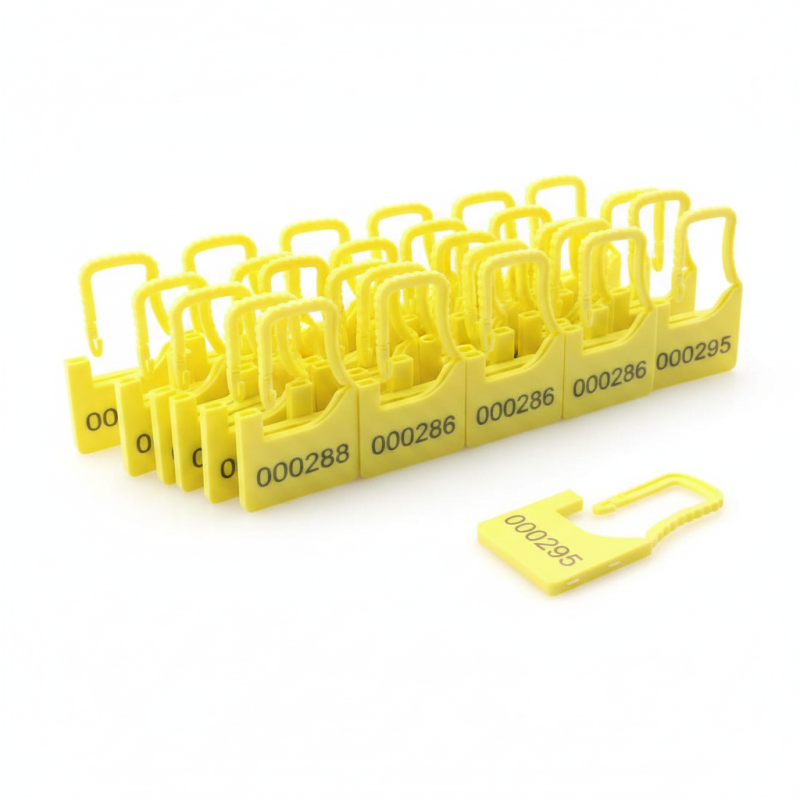
Plastic Padlock Security Seals Tamper-Evident 100-Pack (plastic-padlock-security-seals)


Plastic Seals 40cm
- Colors
- Logo printing
- Barcoding